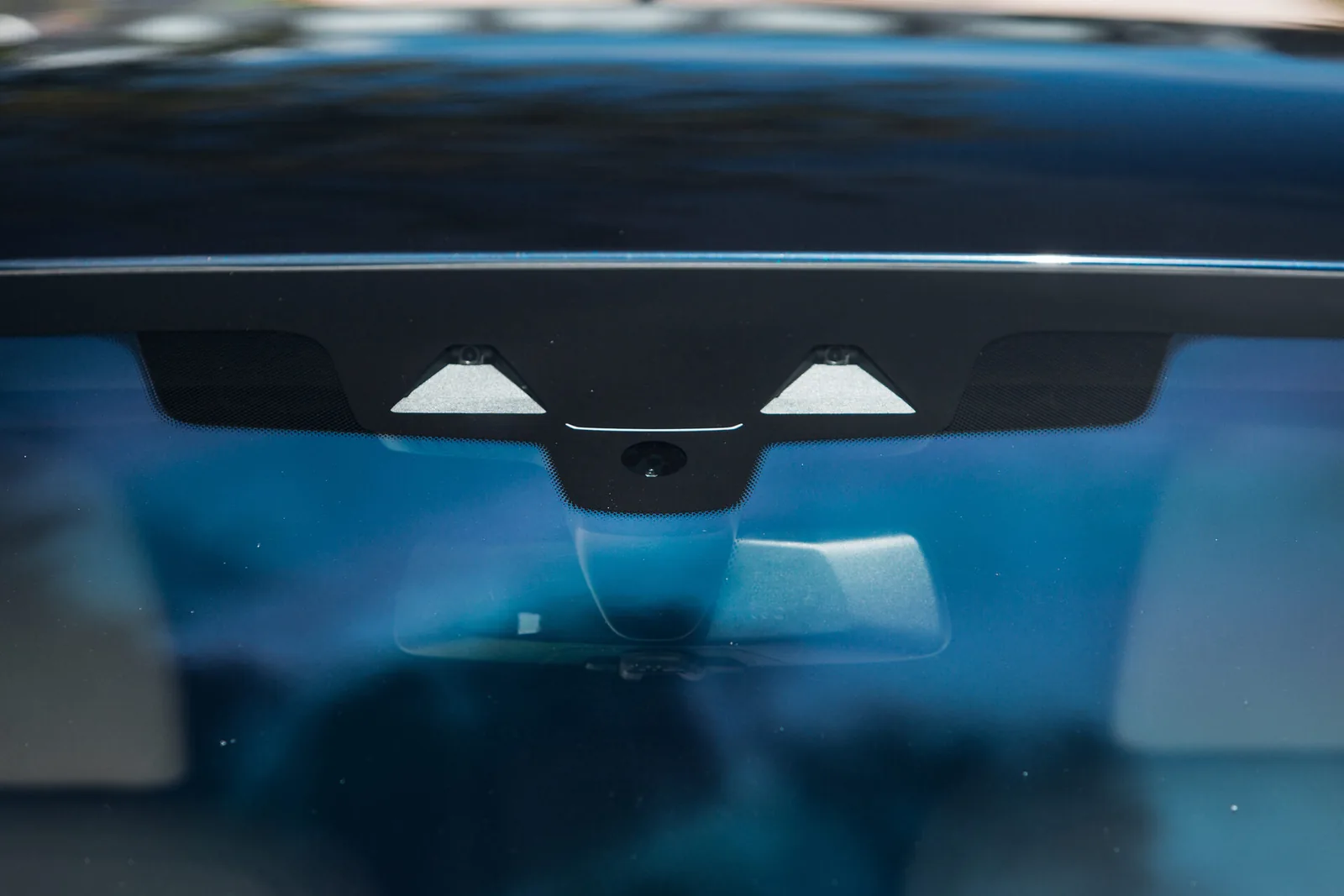
What Is ADAS?
Advanced Driver Assistance Systems (ADAS) use a network of forward-facing cameras, radar units, and ultrasonic sensors — usually mounted behind the windshield, in the front grille, and in the bumpers — to power features like automatic emergency braking, lane-keep assist, adaptive cruise control, and blind-spot monitoring.
Those systems only work correctly when the sensors are aimed with sub-degree precision. Anything that moves the sensor, the glass it's mounted to, or the body panel it's bolted to — even by a fraction of an inch — throws off the calibration and, with it, the accuracy of the safety systems your car relies on.
When You Need It
Manufacturers require recalibration any time a sensor's position or aim could have shifted.
The forward-facing camera is mounted directly to the glass — new glass means a new aim point.
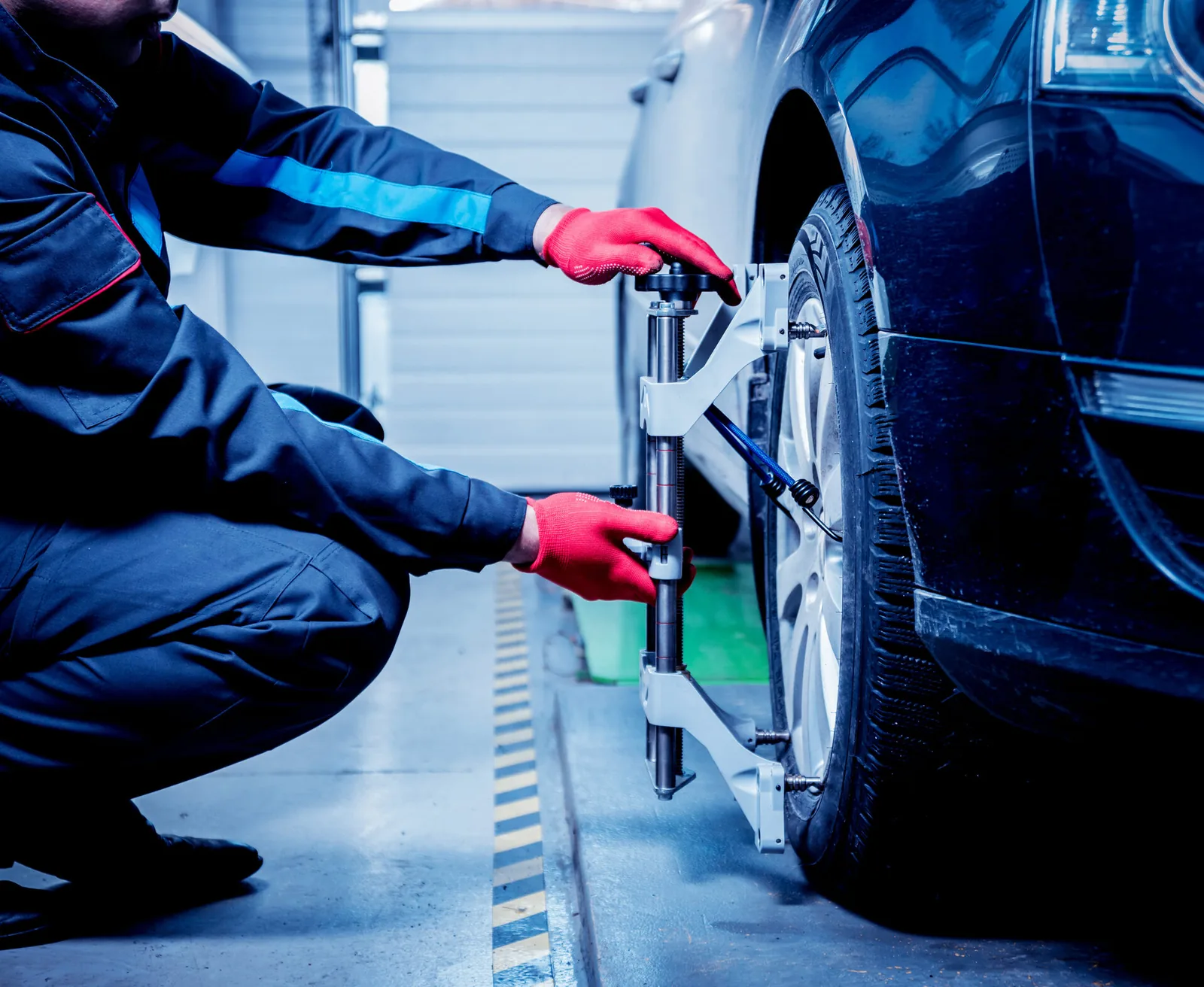
Adaptive cruise and lane-keep systems reference the car's true centerline — alignment work shifts it.
Changing ride height changes the camera's horizon line and the radar's downward angle.
Front and rear radar units live in the bumper — collision repair or replacement requires reaiming.
Any structural correction can shift the reference points every sensor is calibrated against.
Some systems lose their calibration memory entirely when power is cut and need to relearn from zero.
How We Calibrate
Performed in-shop with the vehicle stationary, using OEM target boards and factory-grade scan tools set to exact, measured distances.
Performed on the road at a defined speed and duration, letting the system "learn" lane markings and traffic in real conditions.
Every calibration is confirmed against manufacturer specification and documented before your car leaves the shop.
Systems We Calibrate
Book It Alongside the Repair
If you've had glass, alignment, suspension, or collision work done elsewhere — or you're scheduling it with us — ask about ADAS recalibration in the same visit. We'll confirm whether your vehicle needs it and calibrate it to factory spec before you drive away.